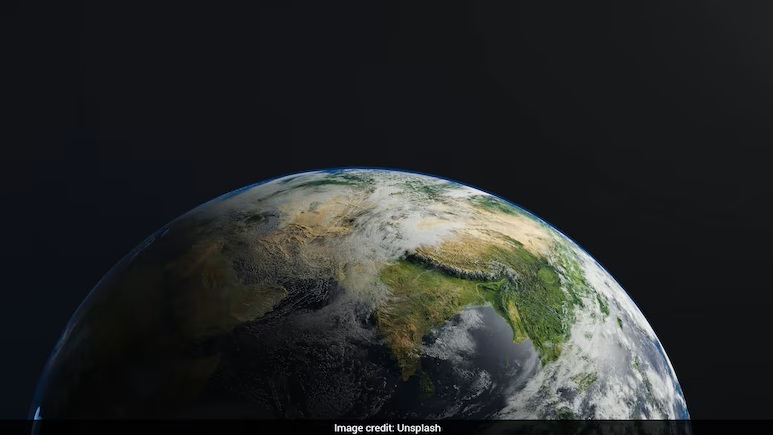
Researchers say Earth’s unique chemical makeup may explain why it became habitable for life, offering clues that could help in the search for life on other planets.
Earth’s ability to support life may not be a simple accident of time and chance — it could be the result of a rare combination of chemical conditions during the planet’s formation that helped create and retain the building blocks essential for life, scientists say.
What the Study Found
According to the new research, Earth’s early chemical environment played a crucial role in shaping its long-term habitability:
- During the formation of Earth’s core and crust, key elements such as phosphorus and nitrogen were retained in the surface layers rather than being lost deep into the planet. This made them available to form organic compounds vital for life.
- A narrow range of oxygen levels early in Earth’s history may have been ideal for keeping these important nutrients in the right places to support life’s chemistry.
- These conditions may have created a kind of chemical “Goldilocks zone” — not too much and not too little of the elements life needs — giving Earth an edge in developing and sustaining living organisms.
The findings suggest that Earth’s habitability may be a rare exception rather than the norm, meaning that planets like ours may be uncommon in the universe.
Implications for the Search for Life
Scientists searching for life beyond our solar system are already using these insights to guide their investigations:
- By understanding the chemical profile that made Earth habitable, astronomers can better identify exoplanets with similar conditions.
- This could help narrow down the list of distant worlds that have the right mix of elements to support life.
In other words, knowing how Earth became suitable for life might tell us where else to look for life in the cosmos.
What Makes Earth Special?
Earth’s journey to habitability involved not just physical conditions like temperature and water, but also the right chemical balance at the right time:
- Scientists believe that early Earth had a stable crust and oceans long before life appeared, creating a platform where organic chemistry could flourish.
- Research suggests that Earth had access to water and essential nutrients very early in its history, possibly from asteroid impacts that delivered key elements like phosphorus and nitrogen.
- Earth’s magnetic field also helped protect the atmosphere and maintain conditions suitable for life over billions of years.
These factors together may explain why life emerged here while remaining rare on other known planets.
What Comes Next
While the study sheds light on Earth’s fortunate start, researchers say more work is needed to understand:
- How common or rare such chemical conditions are elsewhere in the universe
- Whether similar processes have taken place on distant exoplanets
- How early life formed and evolved once conditions were favourable
Such investigations may bring us closer to answering one of humanity’s oldest questions: Are we alone in the universe?