Union Railway Minister Ashwini Vaishnaw shares findings from the inquiry report on the February 2025 New Delhi Railway Station tragedy that killed 18 people.
Overview of the Incident
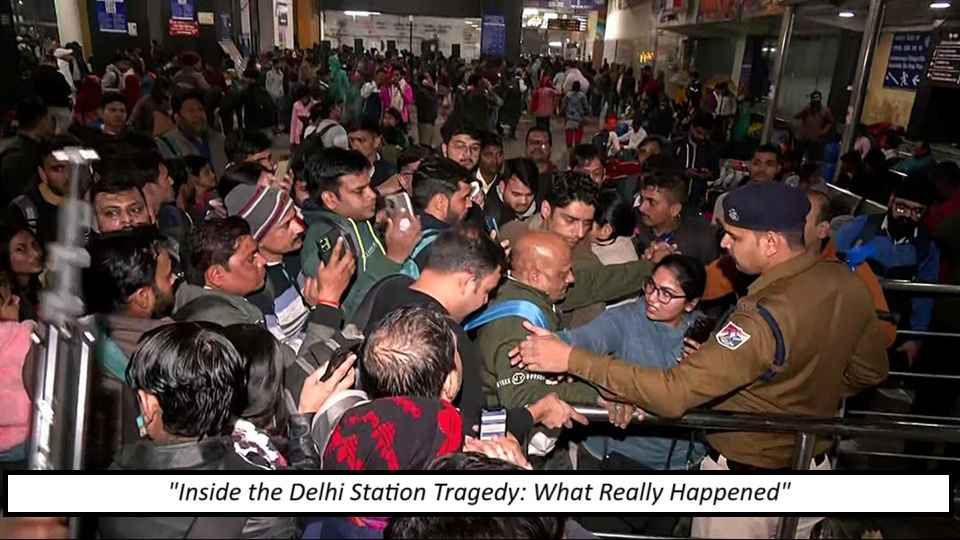
On February 15, 2025, a tragic incident occurred at New Delhi Railway Station where 18 people lost their lives and 15 others were injured. The tragedy happened during a surge of passengers heading to Prayagraj for the Maha Kumbh Mela.
Minister’s Explanation on What Caused the Tragedy
Responding to a question in the Rajya Sabha, Railway Minister Ashwini Vaishnaw revealed key details from a high-level inquiry report. He stated that the incident was triggered when a large headload carried by one passenger fell. This caused passengers on the foot overbridge and stairs to trip, leading to a dangerous pile-up.
- The incident occurred around 8:48 PM on the foot overbridge connecting platforms 14 and 15.
- The report highlighted that many passengers were carrying heavy headloads, slowing movement.
- A sudden fall of one big headload caused a ripple effect, resulting in people falling over each other.
Crowd Management on the Day of the Incident
- Around 49,000 general tickets were sold that day — 13,000 more than the usual daily average.
- The Railway Ministry stated that adequate crowd management measures were in place.
- Despite this, the sudden increase in passenger density after 8:15 PM on the foot overbridge made smooth movement difficult.
Compensation for Victims
- The government has provided Rs 10 lakh to families of deceased victims.
- Seriously injured individuals received Rs 2.5 lakh each.
- Those with minor injuries were compensated Rs 1 lakh.
- A total of Rs 2.01 crore has been disbursed to 33 victims and their families.
New Measures to Prevent Future Tragedies
In response to the tragedy, the railways have introduced enhanced crowd control measures, including:
- Permanent holding areas at key stations.
- Access control systems for confirmed ticket holders at 73 stations.
- Construction of wider foot overbridges.
- Installation of more CCTV cameras.
- Establishment of war rooms for better monitoring at major stations.
Conclusion
The tragedy at New Delhi Railway Station highlights the critical importance of effective crowd management, especially during high-traffic events like the Maha Kumbh Mela. The government is committed to learning from this incident and improving passenger safety across the railway network.