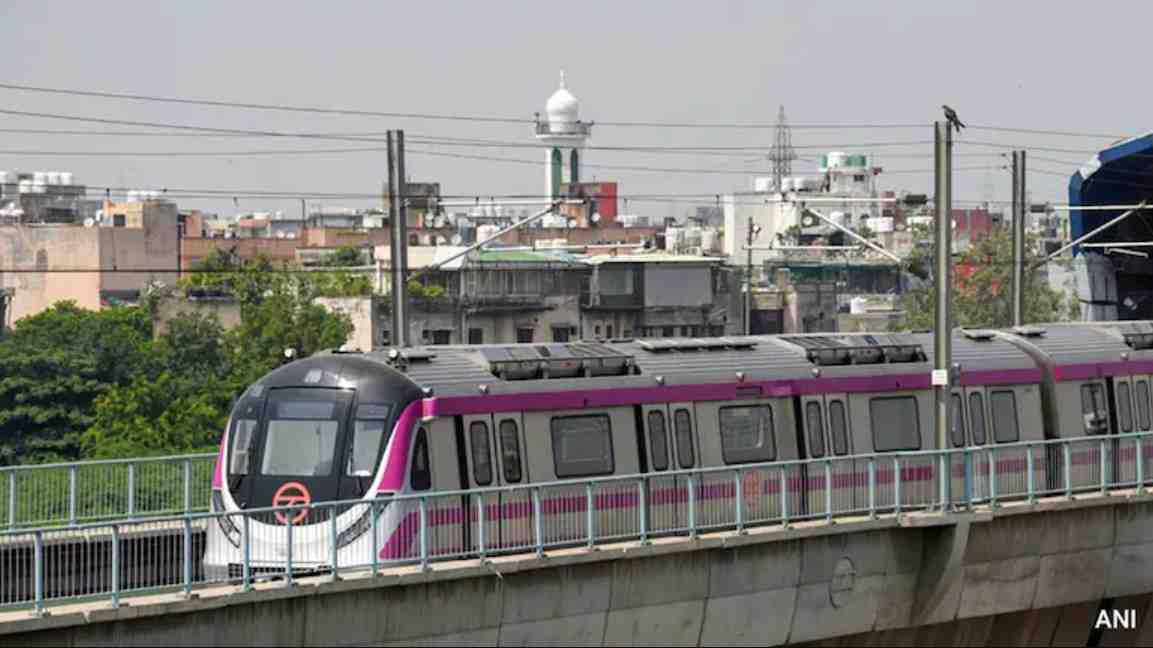
The Magenta Line of the Delhi Metro is set to become the longest metro corridor in the network once expansion work under Phase-IV and Phase-V(A) is completed, significantly boosting connectivity across the Delhi-NCR region.
Biggest Metro Corridor After Expansion
The corridor, officially known as Line-8 (Magenta Line), will stretch from Botanical Garden in Noida to Inderlok, covering about 89 kilometres once all planned sections are operational. With this extended reach, the Magenta Line will overtake existing corridors to become the longest in the Delhi Metro system.
65 Stations and Major Connectivity Boost
Once fully complete after Phase-IV and Phase-V(A) additions:
- The Magenta Line will have 65 stations in total.
- Around 40 of these stations will be underground.
- The line will include 21 interchange stations, allowing travellers to connect to multiple other metro routes without exiting the system.
Among the key interchanges will be Central Secretariat, Azadpur, New Delhi and Inderlok, which will offer connections to three different metro lines each, transforming the ease of commuting across the city.
Driverless Operation and Engineering Highlights
Delhi Metro Rail Corporation (DMRC) officials have said that when all segments are in operation, the Magenta Line will run as a fully driverless corridor, marking another technological milestone for the system.
The line already hosts some notable engineering achievements:
- Haiderpur Badli Mor station is the highest elevated station in the Delhi Metro network.
- Hauz Khas station, also on the Magenta Line, is the deepest underground station in the network.
Impact on Daily Travel
With more stations and 21 interchange points, the expanded Magenta Line is expected to improve movement across Delhi-NCR.
- Travel time between key areas will reduce
- Pressure on other crowded metro lines may ease
- Commuters will get smoother multi-line connectivity
The longer corridor will connect more residential and commercial areas, making cross-city travel more convenient.